Mastering Sourdough French Baguette with Crispy Crust & Open Crumb
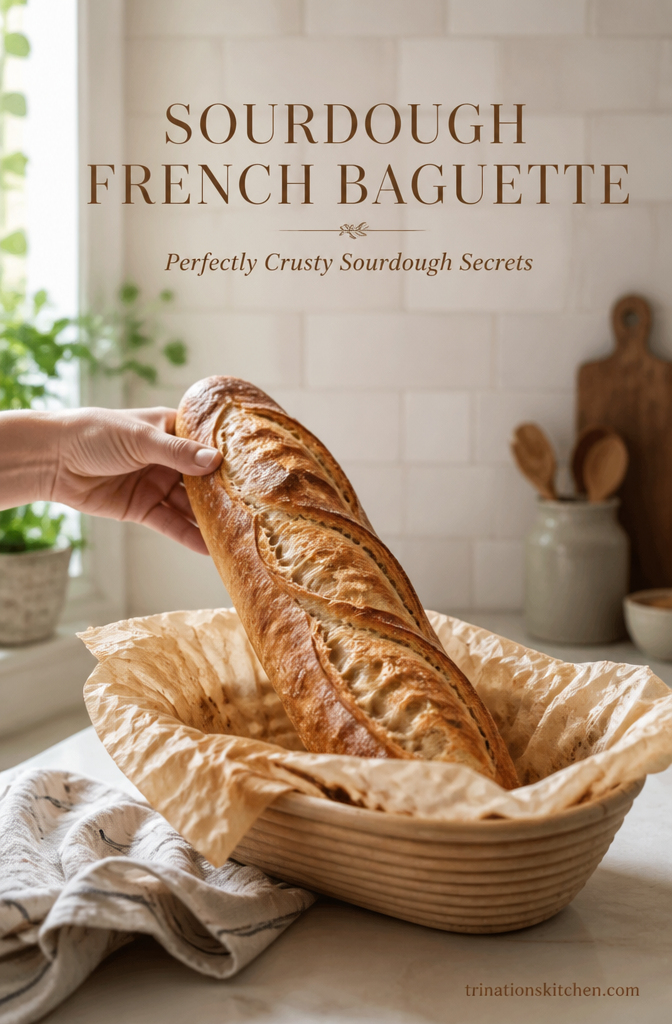
There is a particular satisfaction in pulling a long, golden baguette from your own oven. The crust crackles as it cools, the kitchen fills with the aroma of toasted grain, and the first slice reveals a tender, irregular crumb. This sourdough baguette recipe leans on time and gentle handling rather than complicated equipment, so it is approachable for home bread making while still capturing the spirit of classic French bread.
Start With a Predictable Sourdough Starter
A lively starter is the foundation of every good artisan bread. Feed your starter when it is active and rising, not when it is flat and exhausted. A reliable schedule is to discard most of the starter, then feed it equal parts flour and water by weight, such as 50 grams each, and let it sit at warm room temperature until it doubles and domes on top.
Use the starter when it is bubbly, airy, and slightly sweet-smelling. If it smells sharply acidic or has collapsed long ago, give it another feeding before mixing. For a baguette, a softer starter works better than an extremely stiff one, though both can be used if you adjust the water in the dough.
Build the Dough for a Crispy Crust
A simple baguette dough is flour, water, salt, and starter. Bread flour gives strength and helps the crust stay crisp, while a small amount of whole wheat or rye flour can add flavor and fermentation activity. Keep the hydration moderate so the dough is extensible but not slack. A good starting point is roughly 70 percent water relative to the flour, adjusting for the flour’s thirst.
Mix until the flour is fully hydrated, then let the dough rest before developing it further. During bulk fermentation, use a series of gentle folds instead of aggressive kneading. This preserves gas while building strength. The dough should feel smooth, slightly tacky, and elastic when it is ready to shape.
For the crust, steam is your friend. Create steam in the oven during the first part of baking so the surface stays flexible and expands fully. Once the loaf has set, vent the steam and let the baguette dry out and brown deeply. That final dry heat produces the signature crispy crust of a homemade baguette.
Shape and Score With Confidence
Shaping is where many home bakers hesitate, but the technique is forgiving once you practice it. Divide the dough evenly, then pre-shape into loose rounds or short logs. Rest the pieces for 15 to 20 minutes to relax the gluten.
To shape, flatten each piece gently, fold the top third toward the center, and seal with the heel of your hand. Fold again and seal tightly, creating surface tension along the top. Roll the dough into a long cylinder, tapering the ends if you like. Place the baguettes on a floured couche, parchment, or a baguette pan, seam side down.
Score the loaves just before baking with a sharp blade or lame. Use confident, shallow diagonal cuts along the length of each baguette. Scoring gives the dough a controlled path for expansion, helping it open up and develop a crisp, attractive ear.
Bake for Color, Steam, and an Open Crumb
Preheat the oven well. A hot oven gives the dough an immediate lift, which contributes to an open crumb. Bake at a high temperature for the first several minutes with steam, then lower the heat slightly and continue baking until the crust is deeply golden. Resist pulling the bread out too early; pale crusts soften quickly.
Listen for the crackle as the baguettes cool on a rack. If the bottom sounds hollow and the crust feels firm, the bread is likely done. Cool completely before slicing so the crumb can set. Warm bread can feel gummy if cut too soon, even when it is fully baked.
Common Mistakes and How to Fix Them
- Underproofed dough leads to dense loaves and tight crumb. Let the dough rise until it looks airy and jiggles gently when nudged.
- Overproofed dough can spread flat and bake into a pale, fragile crust. Shape sooner and bake while the dough still has strength.
- Too much handling during shaping creates a tight crumb. Fold with intention, but do not press out every bubble.
- Insufficient steam causes the crust to set before the loaf expands. Use a covered pan, a Dutch oven, or a tray of hot water to generate steam.
- Cutting the bread too soon leaves the crumb wet. Allow the baguettes to cool on a rack for at least 30 minutes.
Variations for Your Next Loaf
- Blend a small portion of whole wheat or rye flour for nutty flavor and better fermentation.
- Add a spoonful of olive oil for a softer crumb, keeping in mind that the crust may be slightly less crisp.
- Mix herbs, garlic, or black pepper into the dough for a savory French bread variation.
- Dust the surface with rice flour before scoring to reduce sticking and create a rustic look.
- Shape shorter loaves for sandwich-style baguettes, or keep them long for a classic presentation.
FAQ
How long does a sourdough baguette stay fresh?
A baguette is at its best on the day it is baked. Store it cut-side down on a board or in a paper bag for a few hours. For longer storage, freeze slices in a sealed bag and toast from frozen to restore crispness.
Can I bake a homemade baguette without a steam oven?
Yes. Create steam with a heavy pan on the lower rack, a tray of hot water, or by baking inside a covered Dutch oven. The goal is to keep the surface moist during the first minutes of baking so the loaf can expand.
Why is my crumb tight instead of open?
A tight crumb often comes from underproofing, over-shaping, or using flour with low strength. Give the dough more time to ferment, handle it gently during shaping, and consider bread flour for better structure.
Read more: Mastering Sourdough French Baguette with Crispy Crust & Open Crumb


Nhận xét
Đăng nhận xét