20 Heavenly Japanese Cheesecake Recipes To Try Today
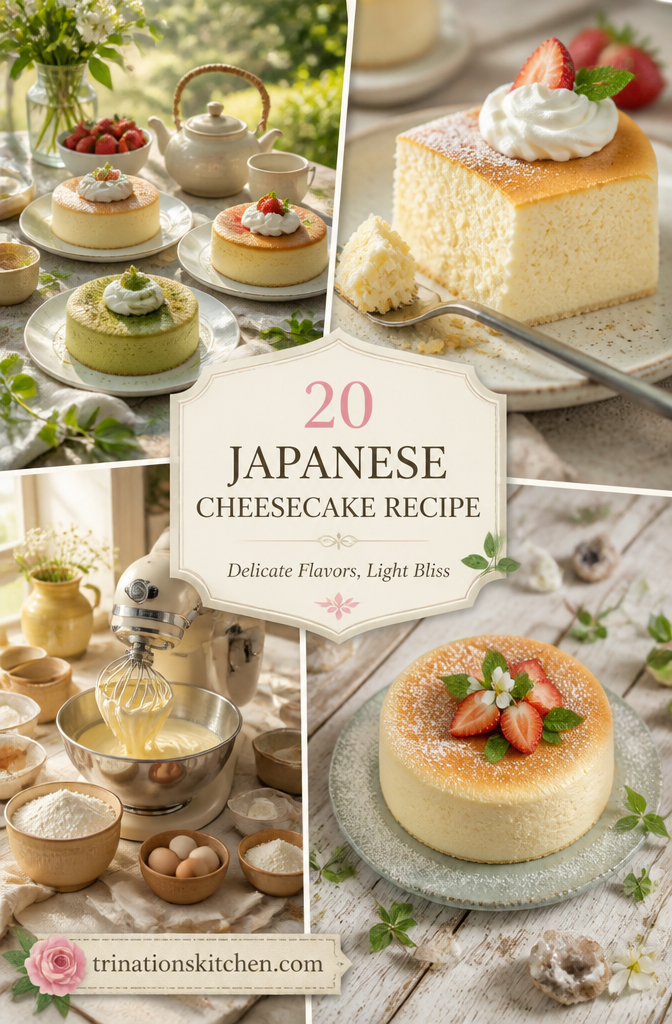
Japanese cheesecake has earned a devoted following for good reason: it is featherlight, softly jiggly, and delicately sweet. Unlike dense Western-style cheesecakes, this version relies on whipped egg whites for a mousse-like lift, creating a dessert that feels indulgent without being heavy. Whether you are planning a dinner party or simply want to treat yourself, these 20 Japanese cheesecake recipes offer a delicious path to fluffy perfection.
Classic Japanese Cheesecake, Step by Step
The classic recipe is the foundation for every variation. Gather cream cheese, sugar, milk or cream, a small amount of butter, cake flour, cornstarch, and eggs. Separate the eggs while cold, then let them come to room temperature for smoother mixing.
- Preheat the oven to about 300°F (150°C). Line a round pan with parchment, leaving the paper slightly above the rim to help the cake rise evenly.
- Beat cream cheese with sugar until smooth. Warm the milk gently and mix it in, then whisk in melted butter.
- Sift the flour and cornstarch into the batter, mixing just until no dry streaks remain.
- Whip the egg whites to soft peaks, gradually adding sugar. They should look glossy and billowy, not dry.
- Fold one-third of the whites into the yolk mixture to lighten it, then gently fold in the rest in two additions.
- Pour into the pan and tap it lightly on the counter to release large bubbles.
- Bake in a water bath for roughly 60–75 minutes, until the top is golden and the center has a gentle wobble. Turn off the oven and let the cake cool inside with the door slightly ajar to prevent sudden shrinkage.
This method produces the airy crumb and cloudlike texture that define a true fluffy cheesecake.
Twenty Variations Worth Trying
Once you master the base, the possibilities multiply. These ideas work beautifully as dessert recipes for any occasion:
- Classic plain with a dusting of powdered sugar
- Matcha green tea for a gentle bitterness
- Lemon zest and juice for brightness
- Yuzu for a fragrant citrus twist
- Earl Grey tea infused into the milk
- Hojicha roasted tea for a toasty flavor
- Chocolate made with melted dark chocolate
- Cocoa dusted on top
- Strawberry swirl with a ribbon of purée
- Blueberry compote folded through the batter
- Mango for a tropical note
- Salted caramel drizzled after baking
- Coconut milk replacing part of the dairy
- White chocolate for extra richness
- Coffee for a mocha profile
- Vanilla bean for classic aroma
- Peanut butter swirled lightly
- Miso for a sweet-savory depth
- Black sesame for nutty elegance
- Honey replacing some sugar for floral sweetness
Each variation keeps the signature lightness while offering a new way to indulge.
Tips for a Fluffy Cheesecake Every Time
Texture is everything in Japanese cheesecake. Keep these practical tips in mind:
- Use room-temperature ingredients. Cold cream cheese lumps and chilled eggs resist smooth mixing.
- Do not overbeat the whites. Stiff, dry peaks collapse easily and make the cake dense.
- Fold gently. Use a spatula to cut through the center, sweep along the bottom, and lift over the top.
- Sift dry ingredients. This prevents flour pockets and keeps the crumb tender.
- Choose the right pan size. A pan that is too large gives a thin cake; too small causes overflow.
- Use a water bath. Place the pan in a roasting pan and add hot water halfway up the sides for even, gentle heat.
- Avoid opening the oven early. Sudden temperature changes can deflate the cake.
- Cool gradually. Let the cake rest in the turned-off oven, then chill before slicing for clean cuts.
These small habits make a noticeable difference in every batch of delicious desserts.
Easy Recipes for Busy Days
Short on time? These easy recipes simplify the process without sacrificing the signature lift.
- Microwave cream cheese briefly to soften it quickly, then whisk until smooth.
- Use a single-bowl method: beat cream cheese, sugar, yolks, and flour together, then fold in whipped whites.
- Bake in a loaf pan for faster cooking and neat slices.
- Make a mini version in ramekins for individual servings.
- Prepare the batter the night before, refrigerate it, and bake in the morning for a fresh dessert.
- Swap fresh fruit for high-quality frozen berries, thawed and drained, to save prep time.
These shortcuts keep the cake light while fitting into a busy schedule.
Common Mistakes and How to Fix Them
Even experienced bakers run into issues. Here is how to avoid the most common pitfalls:
- A cracked top usually means the oven was too hot or the cake cooled too quickly. Lower the temperature slightly and cool gradually.
- A sunken center often comes from underbaked batter or opening the oven too soon. Bake until the center wobbles gently, then cool inside the oven.
- A dense texture points to overmixed whites or too much flour. Measure carefully and fold with a light hand.
- A rubbery crumb suggests overbaking. Start checking a few minutes before the suggested time.
- A wet bottom can result from a water bath that leaked. Wrap the pan tightly in foil and use a deep roasting pan.
- A bland flavor means the batter needed more salt or vanilla. A pinch of salt brightens sweetness.
With these adjustments, your next cake will rise beautifully and stay tender.
Serving, Storing, and Sharing
Japanese cheesecake is at its best when served slightly chilled. Dust with powdered sugar, add a spoonful of softly whipped cream, or pair with fresh berries. For gatherings, slice the cake with a thin, warm knife for clean edges.
To store, wrap the cooled cake tightly and refrigerate for up to a few days. It can also be frozen for longer keeping; thaw in the refrigerator overnight before serving. Bring it to cool room temperature for the softest texture, then enjoy with tea or coffee.
FAQ
Can I make Japanese cheesecake without a water bath?
Yes, but the texture may be slightly less even. If you skip the bath, lower the oven temperature a little, bake on the middle rack, and cool the cake slowly to reduce cracking.
Why did my cheesecake collapse after baking?
Most often the cake was underbaked or removed from the oven too quickly. Bake until the center has a gentle jiggle, then let it cool gradually in the turned-off oven with the door ajar.
Can I use a different flour?
Cake flour gives the softest crumb, but all-purpose flour works in a pinch. Use a little less and sift it well to keep the cake light.
Read more: 20 Heavenly Japanese Cheesecake Recipes To Try Today


Nhận xét
Đăng nhận xét